
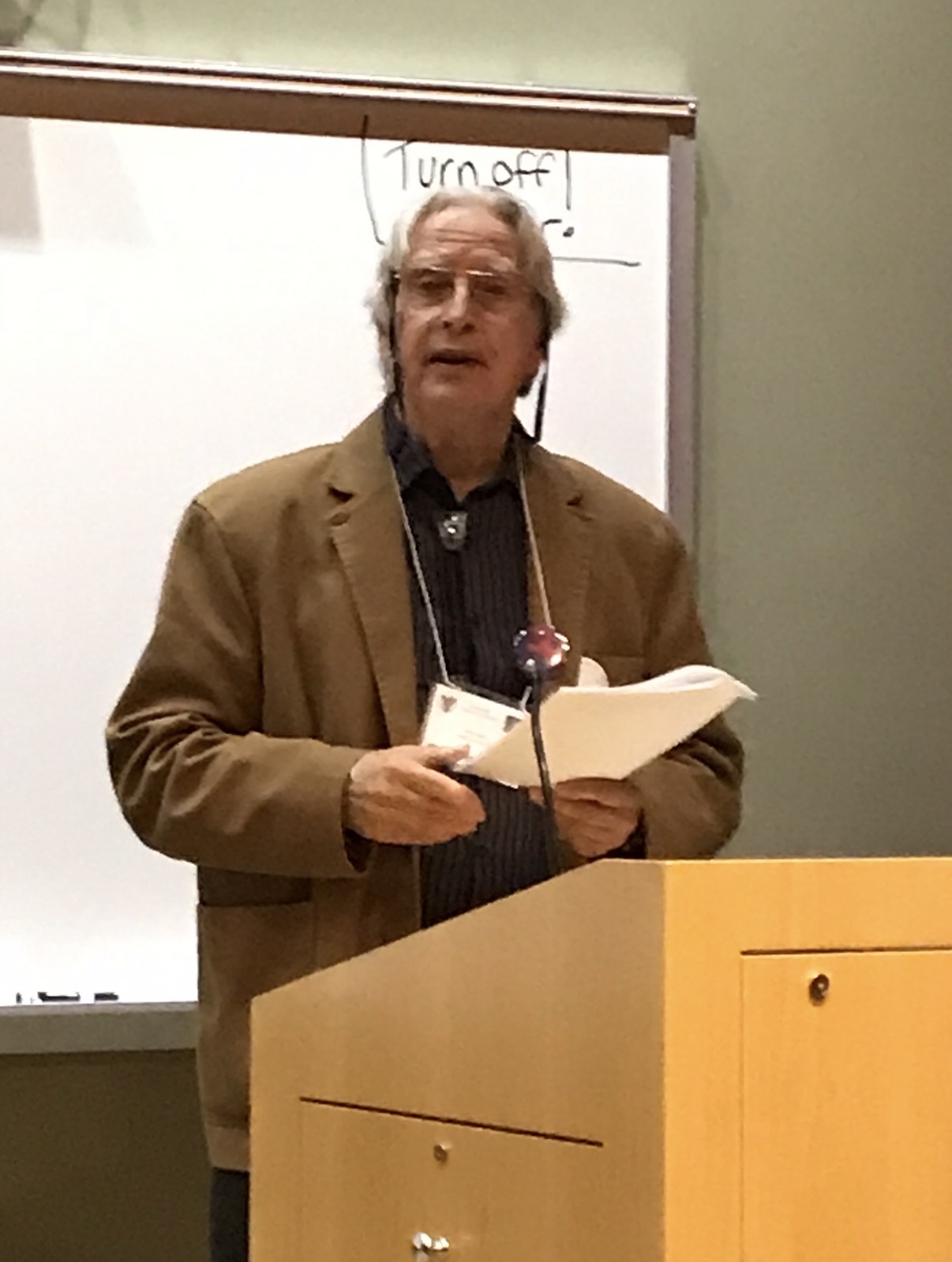
James G. Hart, Professor Emeritus of Indiana University and a friend of the Society of Phenomenology of Religious Experience, passed away peacefully at home on July 28, 2026, at the age of 90, prepared to meet the light of the divine presence that his faith and philosophy had long anticipated.
For more than half a century, Jim devoted his life to philosophy, phenomenology, religious thought, and, above all, to the question of what it means to be human. His philosophical journey began in the 1950s, when teachers at a small Catholic school near Chicago first awakened his interest in philosophy. After joining a Catholic religious order, he earned a B.A. with Honors from Loyola University Chicago in 1960. At the Catholic University of America, he studied under Thomas Prufer, writing his M.A. thesis on theories of consciousness in Bernard Lonergan and others. He later pursued his doctorate at the University of Chicago, where he was deeply influenced by the teaching of Mircea Eliade, Langdon Gilkey, Eugene Gendlin, and Paul Ricoeur. Through Prufer and his lifelong friend and guide Robert Sokolowski, Jim encountered the little-known phenomenology of Hedwig Conrad-Martius.
A Kent Fellowship took him to Munich in 1968 to pursue dissertation research on her thought, culminating in his Ph.D. in 1972. From 1973 until his retirement in 2001, Jim taught in the Religious Studies Department at Indiana University, while also contributing extensively to the Philosophy Department. He supervised generations of students, many of whom went on to become scholars and professors themselves. His courses ranged across philosophy of religion, philosophical theology, phenomenology, and peace and conflict studies, a program he helped establish.
But Jim’s influence extended far beyond the classroom. Even after retirement, he continued to encourage scholars, support translation projects, offer intellectual guidance across cultures, and make himself available to students and colleagues around the world. His lectures to the Iranian Society for Phenomenology in 2020, for example, helped open a space for renewed engagement with German Idealism, Fichte, and Husserlian phenomenology. His philosophical contribution was immense. Jim helped illuminate the relationship between Husserl and Heidegger, introduced Hedwig Conrad-Martius’s cosmological phenomenology to English-speaking readers, advanced the theological and social-ethical dimensions of Husserlian phenomenology, and brought thinkers ranging from Thomas Aquinas and Meister Eckhart to Edith Stein, Maurice Blondel, Dieter Henrich, and Manfred Frank into conversation with contemporary phenomenology.
His major works—including The Person and the Common Life (1992) and the two-volume Who One Is (2009)—stand as enduring contributions to phenomenology and the philosophy of religion. Across more than one hundred articles and book chapters, his philosophical concerns repeatedly returned to love, freedom, dignity, responsibility, and the knowledge most worth having. Perhaps Jim’s most enduring philosophical contribution was his account of who we are: each of us as a unique, singular presence to oneself, yet always open to the presence of others and situated within the possibility of a genuinely common life. For Jim, this was never merely an abstract philosophical claim. It was a way of living. His philosophy became service. During the twenty-five years of his so-called “retirement,” Jim devoted countless hours to ministering to local jail inmates and advocating for jail reform, helping find housing for people experiencing homelessness, and speaking tirelessly for the protection of our shared ecological community.
Through letters to local newspapers, community action, teaching, friendship, and countless quiet acts of generosity, he embodied the conviction that philosophy carries an ethical responsibility: to work for the common good and to speak against injustice. One friend captured this aspect of Jim beautifully: “I know no one who has wanted more not from others but for others.” That may be among the finest descriptions of his life. Jim Hart leaves behind an extraordinary philosophical legacy, but also something more difficult to measure: students encouraged, colleagues supported, strangers helped, and countless people reminded of the dignity and possibility of human life.
May he now encounter the divine presence toward which his philosophy, faith, and life were always reaching.
May he rest in peace.